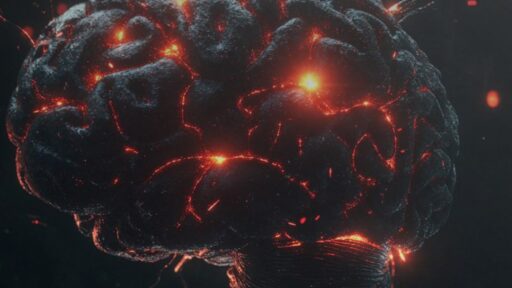
The Psychology of Marketing: Why the First 50 Milliseconds Matter
Introduction: The Psychological Foundation of Marketing
Marketing is not just about selling products or running campaigns—it’s about understanding human behavior. Our brains make decisions, consciously or unconsciously, using complex psychological mechanisms. Modern marketing’s greatest secret lies in understanding these decision-making processes.
The research-driven book I recently read explores the intersection of marketing and psychology with hard data. Trusted sources like Nielsen and TrustPilot provide statistics that highlight how human behavior drives purchasing decisions. The book emphasizes that marketing is not merely about pushing products; it’s about building trust, applying ethical strategies, and leveraging psychological insights.
In this article, I will summarize the key takeaways, examples, and actionable strategies from the book. The goal is to help readers understand conscious marketing techniques and apply them effectively to their websites, campaigns, or business strategies.
Chapter 1 – First Impressions: Decisions in 50 Milliseconds
According to research from Stanford University, when someone opens a website, they form their first impression in just 50 milliseconds. To put that into perspective, your brain doesn’t even recognize the logo yet—it has already decided, subconsciously, whether your site is trustworthy.
This first impression is overwhelmingly visual. In fact, 75% of consumers judge a company’s credibility based solely on website design. This means that your product quality or service excellence may not even come into play if the design looks “cheap” or unprofessional.
Practical Takeaways
- Invest in design as marketing: Professional, clean, and credible web design is not an expense—it’s a direct investment in trust.
- Optimize visuals for trustworthiness: Avoid cluttered layouts, low-quality images, or inconsistent fonts. Each element sends a subconscious signal to the visitor.
Suggested graphic: A visual timeline showing “0–50 milliseconds: first impression” with a human brain icon, highlighting areas processed visually versus cognitively.
Chapter 2 – Cognitive Biases: The Brain’s Shortcuts
Humans rely on mental shortcuts, called cognitive biases, to make quick decisions. Understanding these is like having a marketer’s superpower. Here are some of the most powerful biases highlighted in the book:
Reciprocity: Give First, Ask Later
Reciprocity is the principle of giving first to receive later. By offering free e-books, consultations, or valuable videos, you create a psychological “debt” that makes potential customers more likely to say yes when asked to purchase or engage.
Example: A SaaS company offering a free, actionable guide on improving email marketing sees a 35% higher conversion when the guide leads to a paid course.
Anchoring: The Power of Initial Reference Points
Anchoring affects how we perceive value. When shoppers see an expensive product first, their likelihood of choosing the middle-priced option increases by 28%. The initial price acts as a psychological anchor, shaping all subsequent evaluations.
Practical tip: Display your premium option first to make standard options appear more reasonably priced.
Fear of Missing Out (FOMO)
Humans feel the pain of potential loss about twice as strongly as they feel the pleasure of gain. Headlines emphasizing scarcity or urgency (“Don’t miss out!”) are more effective than neutral gain-focused messages (“Access now!”).
Statistic: Promotions framed as potential loss can increase action rates by 21% compared to gain-framed messages.
Social Proof: “If Everyone’s Doing It, It Must Be Right”
Social proof remains one of the most influential marketing strategies today. According to research:
- 89% of consumers read online reviews before making a purchase.
- 49% trust online reviews as much as personal recommendations.
Displaying genuine reviews can increase conversion rates by up to 270%, according to the Spiegel Research Center. The key is authenticity; fake reviews are quickly detected and destroy trust.
Suggested graphic: Comparison chart of conversion rates with and without reviews, highlighting the 270% increase.
Chapter 3 – Your Website as a Salesperson
A website isn’t just a digital brochure—it must guide visitors psychologically toward action.
Visual Hierarchy
Humans read in predictable patterns, often in a Z-shape: top-left to top-right, diagonally to bottom-left, ending bottom-right.
Application:
- Place your primary message top-left (“The Product That Will Change Your Life”).
- Position the call-to-action button bottom-right (“Buy Now”).
Even this small adjustment can significantly boost engagement and conversions.
Color Psychology
Colors convey subconscious messages:
- Blue → trust, reassurance
- Red → urgency, action
- Green → calm, growth
Choose colors that align with your brand identity to subtly influence perception.
Storytelling vs. Selling
Humans remember stories far more than facts. Marketing should focus on relatable stories, showing how your product solves a problem, rather than listing features endlessly.
Example: Instead of listing a “50-hour battery life” for a smartwatch, share a story of a busy professional relying on it for a week of travel without charging.
Chapter 4 – Ethics as the Backbone
While psychological strategies can influence behavior, ethics must guide application. Short-term manipulation may yield immediate gains but destroys long-term trust and brand equity.
Key principles:
- Use psychological insights to create value, not deceive.
- Ensure transparency in pricing, reviews, and claims.
- Prioritize long-term relationships over one-time sales.
Suggested graphic: A triangle showing “Trust → Loyalty → Revenue,” emphasizing ethics at the base.
Chapter 5 – Summary: Key Lessons for Marketers
- First Impressions Matter: Decisions are made in 50 milliseconds. Invest in visuals and professional design.
- Leverage Cognitive Biases: Use reciprocity, anchoring, FOMO, and social proof wisely.
- Your Website is a Salesperson: Apply visual hierarchy, color psychology, and storytelling.
- Ethics Win in the Long Run: Build trust first; sales will follow naturally.
By applying these principles, marketers can influence decisions subconsciously yet ethically, improving conversions, customer satisfaction, and brand loyalty.